
A study with UGR participation concludes that flying can be cheaper than swimming
Topics University of Granada
The research, published in Science, analyses 50 species of free-ranging birds and bats and indicates that taking advantage of air currents reduces the energy cost of flight below that of swimming.
GranadaYa newsroom ·
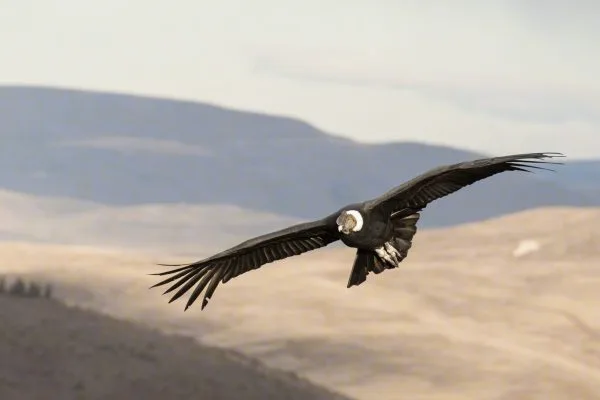
Flying can be cheaper, in energy terms, than swimming. That is what an international study involving the University of Granada (UGR) maintains; it has analysed how 50 species of birds and bats move in the wild and concludes that the atmosphere works as a resource that makes travel cheaper.
The example the team gives: an Andean condor and a swan weigh around eleven kilos, but the condor spends about a fifth of the energy the swan uses per kilometre. The reason is that the condor takes advantage of updrafts and flaps for barely 0.1% of its flight time, compared with 99% for the swan. The condor's energy cost of transport is 79% lower.
It changes the order the textbooks gave
Until now, textbooks ordered ways of moving according to their cost: swimming the cheapest, flying next and running the most expensive. That classification came from laboratory measurements, with animals in water tanks, wind tunnels and treadmills. Outside the laboratory, according to the authors, the order changes.
The work combines 17 years of GPS and accelerometer tracking data from 850 birds and bats of 38 species, together with four years of radar tracking. The animals studied range from twelve grams to more than eleven kilos, and 68 researchers have taken part in the project. Spanish science has contributed flight data on vultures and storks through the Doñana Biological Station (EBD-CSIC), the Miguel Hernández University (UMH) and the UGR.
Vultures that went a hundred times around the planet
The seven vulture species in the study flew a combined 128,000 days and more than 4.3 million kilometres, enough to go around the planet more than a hundred times, flapping for only between 0.1% and 7% of their flight time. The Andean condor, the heaviest, was the one that flapped the least.
The team distinguishes two groups: soaring birds, which extract energy from the environment and minimise their cost, and flapping birds, which depend on the wind and face more variable conditions. According to the UGR researcher Eneko Arrondo, from the Department of Zoology and a signatory of the article, «when atmospheric conditions change, the energy cost of the animals' flight changes and this affects fundamental matters such as migratory routes or foraging areas».
The results have been published in the journal Science and the work is led by the Max Planck Institute of Animal Behavior (MPI-AB) and Swansea University.
Breaking news from News, on your phone
An alert only when something can't wait. Free, no account needed.
On iPhone, alerts only arrive if you first add GranadaYa to your Home Screen. How to do it, step by step
This browser can't receive alerts. Try another one, such as Chrome or Safari.
You've blocked alerts from GranadaYa in this browser. You can turn them back on in its settings. How to do it, step by step
Only what can't wait. Change or remove it in my alerts
Shall we let you know what matters?
Phone alerts
On iPhone, alerts only arrive if you first add GranadaYa to your Home Screen. How to do it, step by step
This browser can't receive alerts. Try another one, such as Chrome or Safari.
You've blocked alerts from GranadaYa in this browser. You can turn them back on in its settings. How to do it, step by step