Granada experiences today the general strike of 11-N with two large marches in the afternoon. We tell you how the metro, urban and metropolitan buses, trains, the airport, hospitals and schools are operating.
Redacción
·
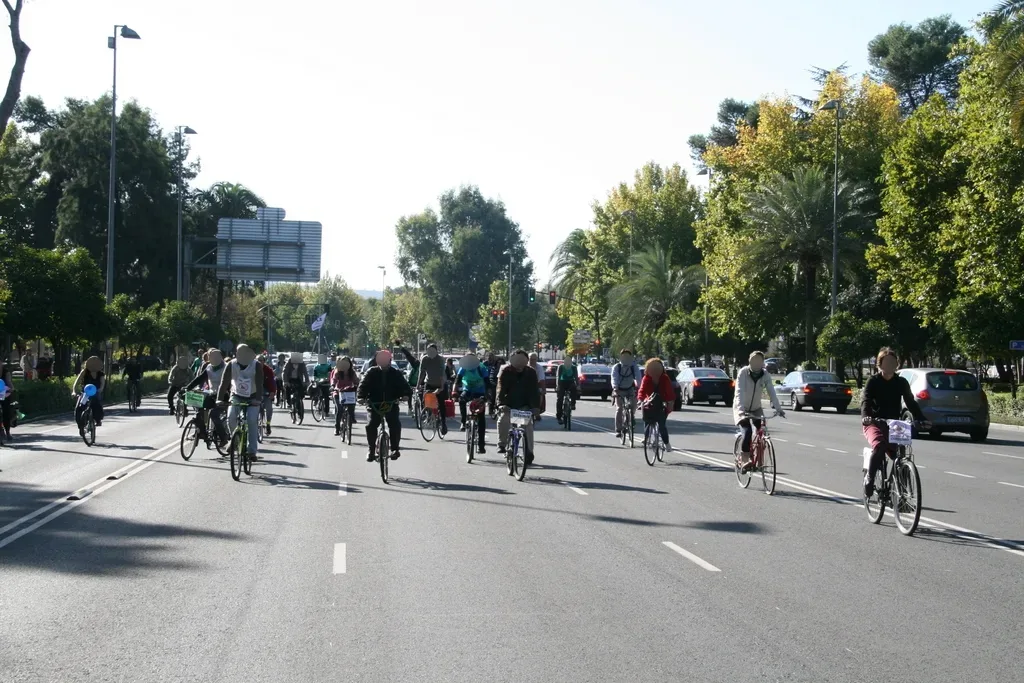
Photo: Javi / Wikimedia Commons (CC BY-SA 2.0)
Today, Wednesday, November 11, there is a general strike. It is called by CCOO, UGT, CGT, CNT and other unions across Spain, over wages, housing and prices. It runs from 00:00 to 24:00; in companies with shifts, it begins in the last shift before midnight. In Granada there will be marches in the morning and two demonstrations in the afternoon, with diversions on city centre buses.
Metro and buses
The Granada metro runs at 60%, with stoppages in time slots throughout the day, and when it starts running again after each stoppage it takes between one hour and an hour and a half to recover its normal frequency. It is advisable to check the metro website before setting out.
Urban buses and the Consorcio's metropolitan buses run at 60%. The Consorcio has warned of diversions due to the marches on Gran Vía, Triunfo and Emilio Orozco from 8:30 to 11:30 and from 16:30 to 21:00 (lines 105, 110, 111, 305 and 313), and on Cartuja and Capitán Moreno from 8:30 to 11:30. Line 245 to the airport only passes through the centre at 6:00, 7:00, 14:00 and 15:20. Taxis are not joining the strike.
Media Distancia trains, including Avant, run at 65% on average and AVE and Larga Distancia at 73%, according to the resolution of the Ministry of Transport reported by Renfe. Iryo keeps 32 of its 44 trains and Ouigo, 69%. Ticket offices handle changes and refunds; before going to the station it is advisable to check whether your train is among those running.
Among the protected Media Distancia trains are those from Granada to Sevilla and to Málaga.
At Federico García Lorca airport, Transport protects 73% of flights with the Canary Islands, Balearic Islands, Ceuta and Melilla, 62% of those with no alternative by land in under five hours and 34% of the rest (resolution). The flight must be confirmed with the airline.
Hospitals and health centres
SAS hospitals work as on a Sunday or public holiday, with emergency departments, ICUs, delivery rooms and emergency operating theatres fully covered. Treatments that cannot wait are guaranteed: chemotherapy, radiotherapy, cancer surgery, dialysis and oxygen therapy. What is not guaranteed are consultations, tests and scheduled operations that can be postponed, so anyone with an appointment today may find it is changed.
In health centres without an emergency service (SUAP) at least one doctor remains for urgent cases; in auxiliary clinics there are no minimums and you must go to the reference centre, as on a public holiday. 061 maintains 90% of call handling and all its mobile teams, and Salud Responde, 75%. Pharmacies open as on a Sunday. This is set by the order of the Regional Ministry of Health (SAS note).
Schools and University
Schools and secondary schools open with one member of the management team and between one and three more teachers, depending on the number of pupils, but classes are not guaranteed. The canteen runs at most at 33% of usual, so it is advisable to ask at the centre before leaving children to eat. Nursery schools for ages 0 to 3 remain with the management, one to four technicians and one person in the kitchen.
The University of Granada has set minimum safety, maintenance and IT staffing throughout the day.
Rubbish and municipal services
Neither Inagra nor the City Council has published its own figure. The Regional Government resolution requires collection to be maintained alongside hospitals, health centres, schools, care homes and markets, and also water, street lighting, traffic lights, firefighters and cemeteries.
Care homes for the elderly, for people with disabilities and for minors operate as on a public holiday, and day centres at 50%. Home help is provided according to the degree of dependency, from 90% of hours in the most severe cases to 40% in grade I, always with washing, food and medication guaranteed.
Other services
—Correos: offices open at their usual hours with one to three people per shift and deliveries are maintained at half, especially because of postal voting for 29-N (order in the BOE).
—Petrol stations: at least 20% of those in each comarca must open (BOE).
—112: provincial rooms work with half their operators and regional ones with 80%.
—State offices (SEPE, Social Security, DNI): no minimum services have been published. They open, but service depends on how many people join the strike.
—Banks and shops: they are not essential services and have no minimums. Each will open according to its staff.
—Canal Sur: it only broadcasts the news, in reduced format.
—Regional Government museums and monuments: only security staff remain, so the foreseeable outcome is that they close.
Marches and demonstrations
At 10:00 columns set off from the Delegación de Educación and from Almanjáyar that meet at 11:00 at Puerta Real. At 16:30 there is a march for housing from the plaza Isabel la Católica to the Paseo del Salón. The main demonstration sets off at 17:30 from the Jardines del Triunfo and continues along Gran Vía, Reyes Católicos, Puerta Real, the Acera del Darro and the Paseo del Violín to the Palacio de Congresos. These are the times given by the organisers.
What nobody has published yet is the monitoring data. GranadaYa will be reporting throughout the day how the minimum services are being met.