The 19 environmental agents of northern Granada open their renovated headquarters in Baza
Topics Baza Sierra de Baza
The Unidad Biogeográfica número 1 de Granada, based in Baza, covers 37 municipalities in the north and northeast of the province, including the Sierra de Baza and Sierra de Castril natural parks. Its premises have recently been refurbished.
Javier C. · ·
Update 16:32
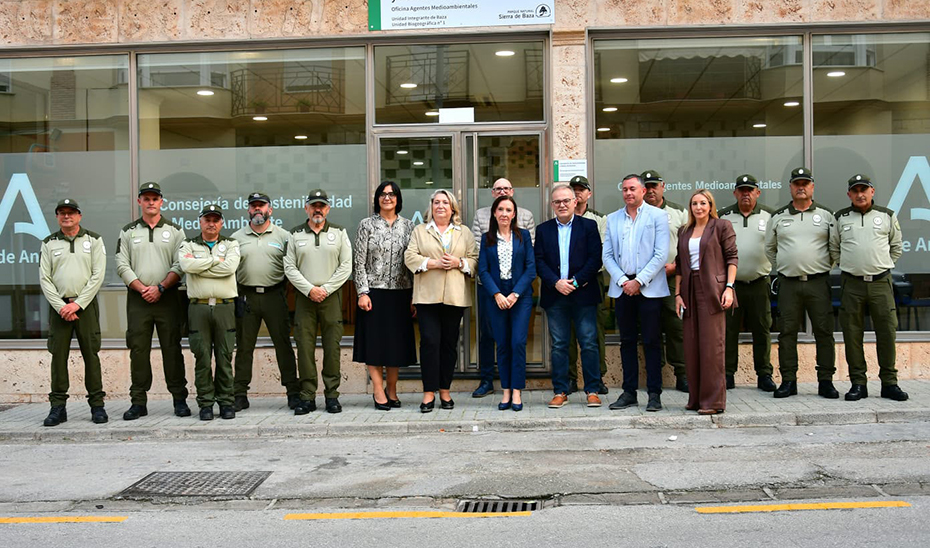
The visit of the Minister of Sustainability and Environment, Fina Martínez, to the offices of Biogeographic Unit number 1 took place last October 19, as specified by the Baza City Council. The renovated facilities are located on calle Sierra Morena in the town.
The Deputy Minister of Sustainability and Environment, María López Sanchís, also took part in the tour, a name that had not appeared among the attendees mentioned so far.
The 19 environmental agents of Biogeographic Unit number 1 of Granada work from refurbished premises in Baza. The ground-floor space has 205 usable square metres distributed across a shared work area, a coordination office, a meeting room and archive and storage spaces. It also has a kitchen-office and two toilets, one of them adapted for people with disabilities.
What the unit covers
Its area of action covers 37 municipalities in the north and northeast of the province, spread across the comarcas of Castril-Nordeste, Hoyas de Baza and Marquesado-Guadix. Among the localities included are Huéscar, Orce, Galera, Benamaurel, Cúllar, Guadix, La Calahorra, Alquife, Valle del Zalabí, Baza and Castril. The service extends through the Sierra de Baza and Sierra de Castril natural parks.
Surveillance, inspection and reports
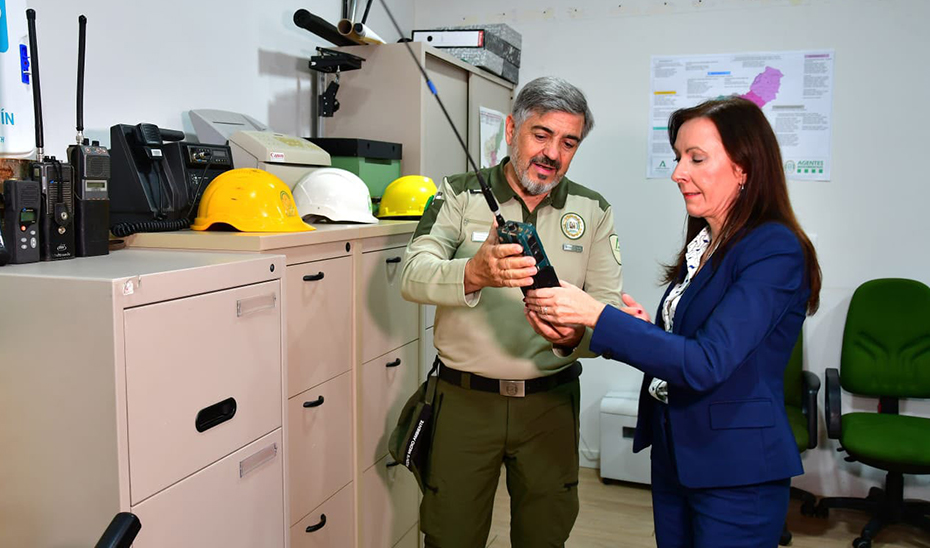
The work of this team combines presence in the field with the processing of documentation. It deals with the prevention of forest fires, surveillance of natural spaces, inspections of uses and exploitation of the environment and monitoring of flora and fauna. When possible infractions are observed, the agents draw up records, reports and complaints. For this they use the GAVIS application, which allows records and reports to be processed from the very places of action, and drones in the surveillance of protected areas that are difficult to access.
Two parks with different characteristics
The Sierra de Baza Natural Park has 53,649.51 hectares and is located in the east of the province, on the border with Almería. It comprises land in Baza, Caniles, Dólar, Gor and Valle del Zalabí, and stands out for the contrast between its mountains and the high plains and steppe landscapes that surround it. The Sierra de Castril Natural Park, with nearly 12,700 hectares, occupies entirely the municipal district of Castril, in the Subbetic Cordillera, and is known for its mountain landscapes, the river ecosystems of the Castril river and its geological and biological richness.
The visit
The Regional Minister for Sustainability and the Environment of the Junta de Andalucía, Fina Martínez, has visited the team's premises on her first trip to a biogeographic unit. During the tour she learned about the organisation of the service and the coordination and documentation-processing spaces. Also taking part were the mayor of Baza, Pedro Justo Ramos; the director general of Protected Natural Spaces, José Enrique Borrallo; the territorial delegate, Trinidad Herrera; the provincial coordinator of the Environmental Agents of Granada, Antonio Aguilar, and the coordinator of Biogeographic Unit number 1, Rafael García.
Biogeographic units are the territorial demarcations in which the work of environmental agents is organised. There are five per province in Andalucía, in addition to the natural spaces of Sierra Nevada, Sierra de las Nieves and Doñana, which cover territories of several provinces. The Law on Environmental Agents of Andalucía, approved in 2025, sets out their functions of surveillance, inspection and protection of natural heritage.