
La Casa de Cázulas donates its documentary legacy to the Archivo Histórico de Granada
The collection brings together documents, photographs and a library dated between 1309 and 1977 and will remain accessible for scientific research.
GranadaYa newsroom ·
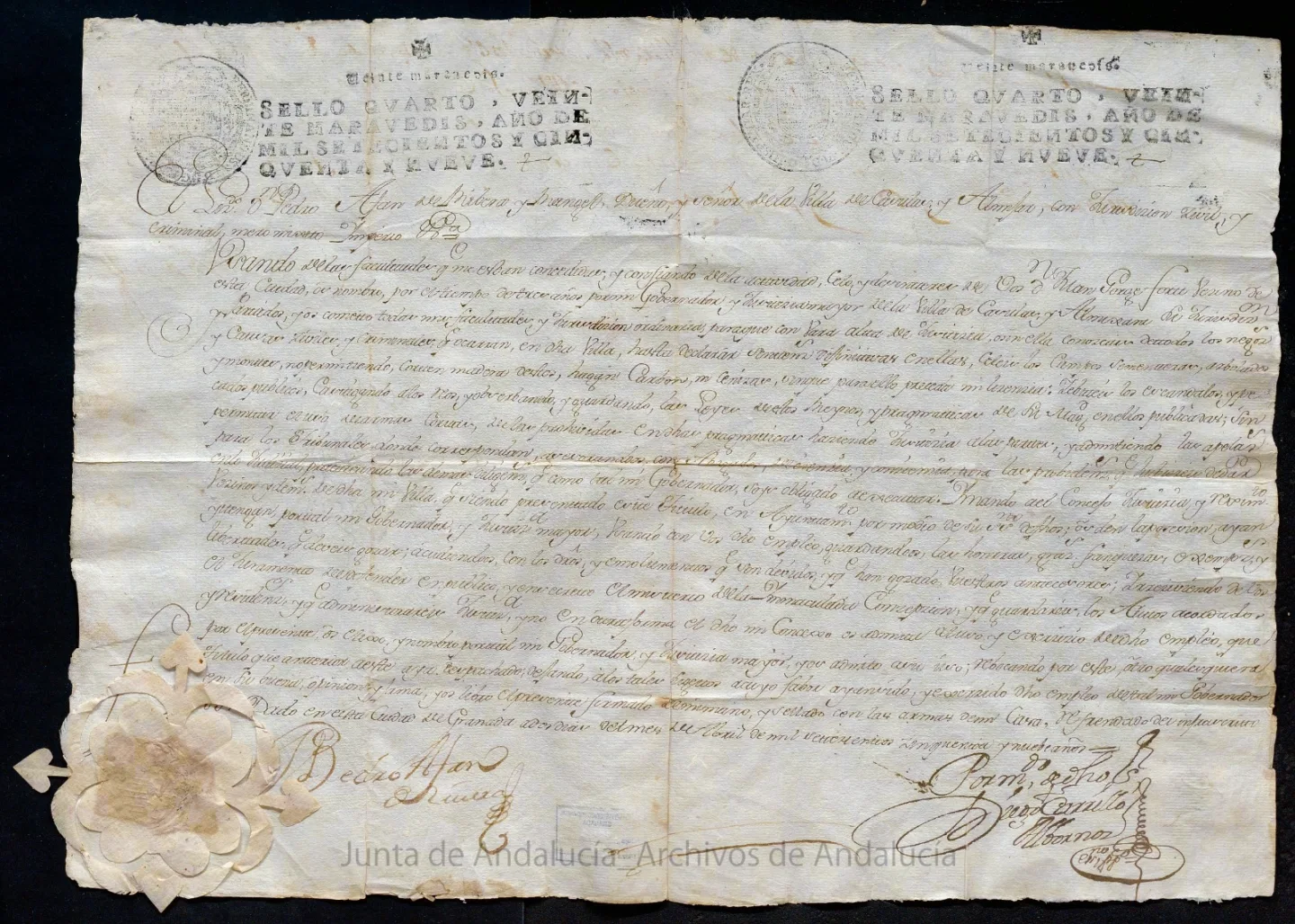
The Archivo Histórico Provincial de Granada has incorporated the documentary legacy of the Casa de Cázulas, a collection of assets dated between 1309 and 1977 that includes documents, photographs, negatives, plans and a library of more than 200 items. The documentation focuses on what was historically known as Tierra de Almuñécar, an inland area of the Granada coast for which very little documentation is preserved.
The collection was offered by the Sociedad Cooperativa del Campo Agrícola y Ganadera del Campo de Cázulas through a letter dated January 14. From there, the administrative procedure was opened and the required technical studies were carried out, which have led the Consejería de Cultura, Patrimonio Histórico y Deporte to accept the donation. The corresponding order was published this Friday in the Boletín Oficial de la Junta de Andalucía (BOJA).
What the legacy holds
The archive contains mainly patrimonial and administrative documentation, to which are added 172 positive photographs on paper from the second half of the 19th century, 82 glass plate negatives from between 1865 and 1925, 158 postcards, six prints, nine albums and 21 plans, twelve of them of the Philippines. The library brings together 213 items of literature, science and sheet music. The main medium is paper, although there are also items on parchment.
Among the collections are those of several families and marquisates, such as the Afán de Rivera (1549-1880), the Bermúdez de Castro Seriñá (1545-1942) or the Dorado Bermúdez de Castro, with the marquisates of la Nava de Barcinas, Villanueva de la Sagra and Campomanes (1577-1916). Although the documentation focuses on the Tierra de Almuñécar, marriages with other señoríos mean that there are also references to Balcares, Velefique, Gérgal and Féber, and to areas of Andalucía, Extremadura and Castilla.
The archive is organized into three sections: the patrimonial documents, those derived from the civil and criminal jurisdiction exercised by the governor of the señorío and those of the administration of the señorío, later run as a timber and resin estate, with charcoal production and an electricity factory.
According to the Consejería, all these collections will enter permanently the Archivo Histórico de Granada, where they will be kept and conserved and will remain accessible for scientific research. The consejera de Cultura, Patrimonio Histórico y Deporte, Patricia del Pozo, has thanked the cooperative for having offered this collection "of undoubted historical and patrimonial interest" to the autonomous community.
Breaking news from News, on your phone
An alert only when something can't wait. Free, no account needed.
On iPhone, alerts only arrive if you first add GranadaYa to your Home Screen. How to do it, step by step
This browser can't receive alerts. Try another one, such as Chrome or Safari.
You've blocked alerts from GranadaYa in this browser. You can turn them back on in its settings. How to do it, step by step
Only what can't wait. Change or remove it in my alerts
Shall we let you know what matters?
Phone alerts
On iPhone, alerts only arrive if you first add GranadaYa to your Home Screen. How to do it, step by step
This browser can't receive alerts. Try another one, such as Chrome or Safari.
You've blocked alerts from GranadaYa in this browser. You can turn them back on in its settings. How to do it, step by step