29-N general election in Granada How to vote, the calendar and every result since 1977

The UGR notes that science does not agree on the cultural aspect of suicide

Topics Escuela Andaluza de Salud Pública ibs.GRANADA University of Granada

A team with participation from the University of Granada reviews 18 studies and finds 67 different factors labeled as cultural, with disparate definitions.

GranadaYa newsroom ·

Una mano abierta apoyada tras un cristal empañado con gotas de agua, vista en tonos oscuros.
Photo: Universidad de Granada
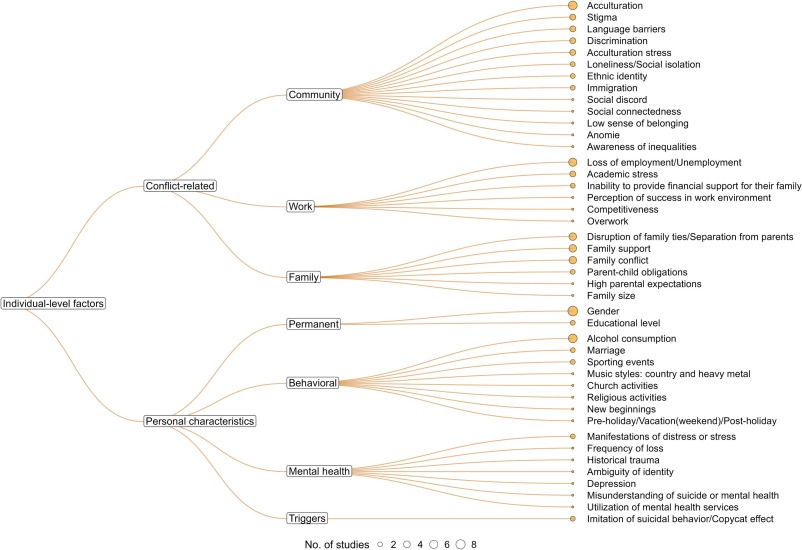
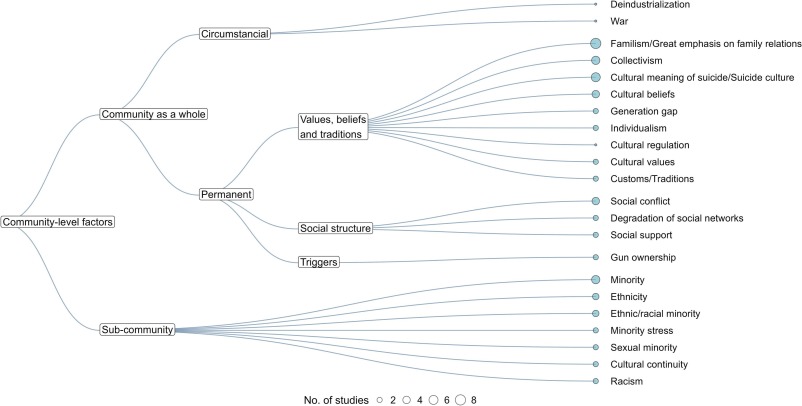
More than 720,000 people die by suicide each year worldwide, according to the World Health Organization (WHO) estimate cited in a work with participation from the University of Granada (UGR). The question that team took to the laboratory is what role culture, shared norms and the social environment play in suicidal behavior. The answer they found is that the scientific community does not speak the same language. The study, published in Preventive Medicine Reports, analyzed 49 articles and selected 18 scientific reviews located in Scopus and Web of Science up to May 20, 2023. Among those 18 reviews, only two expressly defined what "culture" is and only one defined "cultural factor." The researchers identified 67 different factors that previous works had linked to culture and suicidal behavior. The most repeated were gender, the importance of family relationships, the processes of adapting to another culture and alcohol consumption.

The same factor, opposite meanings

The case of the family serves to understand the problem. Depending on the circumstances, strong family ties can be associated with support and protection, while family tensions or conflicts can be related to greater vulnerability. Something similar happens with difficulties adapting to a different society, experiences of discrimination or social norms about how to express emotions: they change meaning depending on the group and the context. Hence the authors conclude that it is not appropriate to apply the same explanation to all people or to all groups. The team proposes a classification of those 67 factors into two levels. The first brings together characteristics shared by communities or groups, such as norms, values, traditions or social structures. The second gathers circumstances that can be studied person to person, such as relationships with family, work and the social environment. The goal is for researchers from different areas to use common definitions and be able to exchange knowledge. Among the uses the authors point out is better understanding why suicide has different frequencies among populations, detecting cultural or social barriers to asking for help and designing prevention programs tailored to each community. The researchers themselves call for caution: fourteen of the 18 reviews were narrative, the search used restrictive criteria and the classification is provisional. That is why they recommend expanding the search, incorporating original studies and strengthening collaboration between disciplines, especially with anthropology. The work is signed by Ana I. Fernández-Díaz, Nicolás Francisco Fernández-Martínez, Camila Higueras-Callejón, Eladio Jiménez-Mejías, Luis Miguel Martín de los Reyes and Pablo Lardelli-Claret, from UGR, CIBERESP, ibs.GRANADA and the Escuela Andaluza de Salud Pública. The full publication can be consulted at Preventive Medicine Reports.

Shall we let you know what matters?

Phone alerts

Change or remove it in my alerts

2 fotos

Foto: Universidad de Granada