29-N general election in Granada How to vote, the calendar and every result since 1977

A study with UGR participation warns of more plant extinctions on European summits

Topics Sierra Nevada University of Granada

An international study published in Science, with two researchers from the University of Granada, concludes that warming accelerates the loss of specialized high-mountain plants on 62 European summits, including Sierra Nevada.

GranadaYa newsroom ·
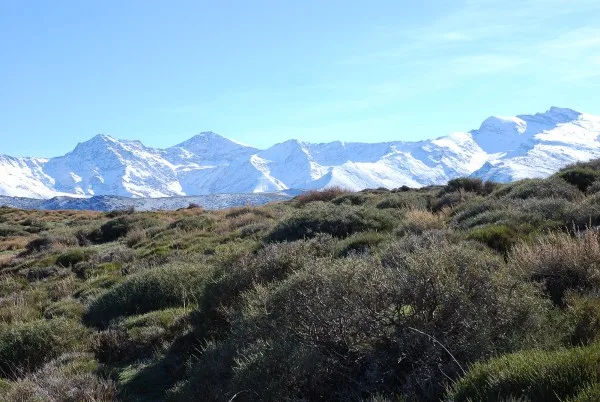
Matorral bajo y seco en primer plano y, al fondo, una cadena montañosa nevada bajo un cielo azul despejado.
Photo: Universidad de Granada
The summits of European mountains are gaining species, but losing those that are characteristic of high mountain areas. An international team of 37 scientists, with the participation of researchers from the University of Granada Juan Lorite and Rosa Fernández Calzado, has analysed the vegetation of 62 European summits on four occasions between 2001 and 2022, within the global monitoring initiative GLORIA, and concludes that local extinctions have accelerated in the last 20 years due to climate warming.

More species, but fewer exclusive ones

Warming has allowed many plants to expand their range towards higher elevations, so the vegetation of the summits is now richer in species. However, the study, published in Science, points out that this apparent improvement hides a negative side: loss rates are also increasing and affect above all plants specialised in high altitude. Species whose range was found on a summit are overrepresented among those that have disappeared. The data show that losses grow with the magnitude of warming and are greater near the lower limits of each species' range. Juan Lorite, from the Department of Botany of the University of Granada, explains that "plants that inhabit Mediterranean mountains, such as Sierra Nevada, are especially vulnerable to climate change", because the warming of the massif favours the arrival of species from lower areas and generalists to the detriment of those exclusive to high mountain areas.

An accumulated extinction debt

High-altitude plants are long-lived and resistant to stress, so their local extinction may come late relative to the environmental changes that cause it. This generates an accumulated "extinction debt". The results suggest that extinctions are preceded by prolonged phases of decline, so that current rates could respond to changes that began decades ago. Stefan Dullinger, coordinator of the project, points out that the data "could indicate that an extinction debt is beginning to be paid off", although he considers further research necessary to confirm it. The work has been funded by the European Research Council (ERC) within the framework of the European Union's Horizon 2020 programme.

Anyone wanting to know what the weather will be like in Granada these days will find the updated forecast on our weather page.

Shall we let you know what matters?

Phone alerts

Change or remove it in my alerts