Quien acepta mitos sobre ciberviolencia sexual ve más consentimiento donde no lo hay
Topics University of Granada
A University of Granada study with 521 social media users links those beliefs to blaming the recipient of unsolicited sexual images more.
GranadaYa newsroom ·
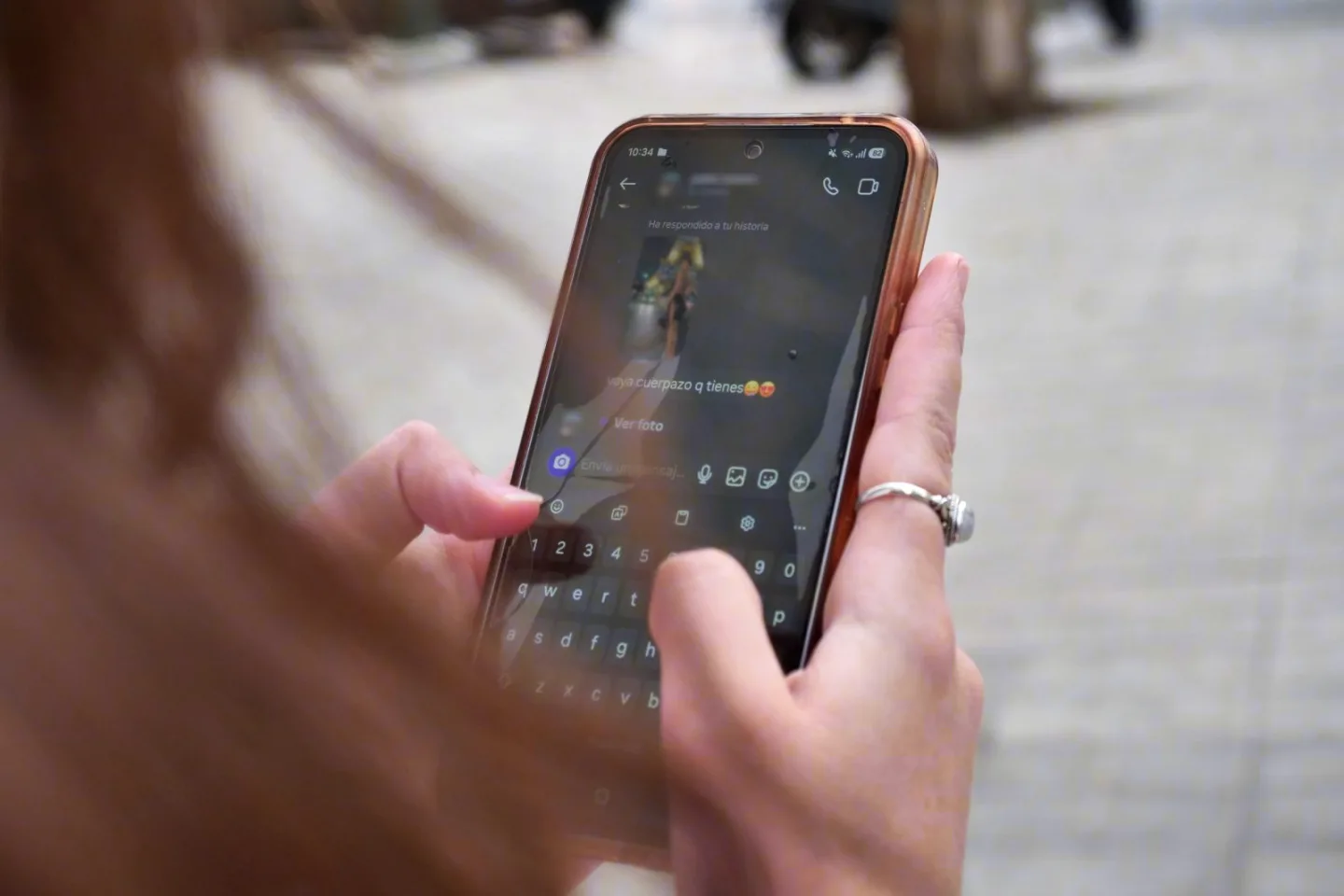
Receiving a sexual image without having asked for it is not consenting to anything, but not everyone interprets it the same way. A study by the University of Granada (UGR) concludes that those who accept more myths about sexual cyberviolence tend to see consent where there was only prior interest and to blame more the woman who receives those images.
The research, carried out with 521 men and women who use social media daily in Spain, analyzed how situations of sending unsolicited sexual images are assessed. The effect is greater when the woman had previously shown sexual interest: in those cases, those who endorse these myths more interpret behaviors such as replying to flirting messages or using a certain tone as signals that justify receiving explicit images.
Explicit signals versus assumptions
The work also examined how the participants reason. Those who accept the myths more rely on details of behavior, such as the tone of the conversation or certain emojis, to take consent for granted. Those who reject them focus more on clear signals, such as whether or not there is verbal authorization.
The results link that perception with other judgments: those who attribute more consent also hold the victim more responsible and consider what happened less serious. Hence the research team stresses the need to distinguish between showing sexual interest and consenting to a specific interaction, and to understand consent as something that is given clearly and explicitly.
The study is signed by Rocío Vizcaíno Cuenca, Mónica Romero-Sánchez and Hugo Carretero-Dios, from the Sexism, Myths and Violence against Women laboratory at the UGR, and has been disseminated on the occasion of 25N, International Day for the Elimination of Violence against Women. The results have been published in the journal Computers in Human Behavior.
Anyone who wishes to consult the research can do so at the article page on ScienceDirect.
Breaking news from News, on your phone
An alert only when something can't wait. Free, no account needed.
On iPhone, alerts only arrive if you first add GranadaYa to your Home Screen. How to do it, step by step
This browser can't receive alerts. Try another one, such as Chrome or Safari.
You've blocked alerts from GranadaYa in this browser. You can turn them back on in its settings. How to do it, step by step
Only what can't wait. Change or remove it in my alerts
Shall we let you know what matters?
Phone alerts
On iPhone, alerts only arrive if you first add GranadaYa to your Home Screen. How to do it, step by step
This browser can't receive alerts. Try another one, such as Chrome or Safari.
You've blocked alerts from GranadaYa in this browser. You can turn them back on in its settings. How to do it, step by step