Intermittent fasting and exercise together achieve greater fat loss in people with obesity
Topics University of Granada
A trial by the University of Granada with 187 adults with obesity concludes that combining intermittent fasting and supervised exercise for 12 weeks reduces weight and body fat more than usual care, although the effects do not persist one year later.

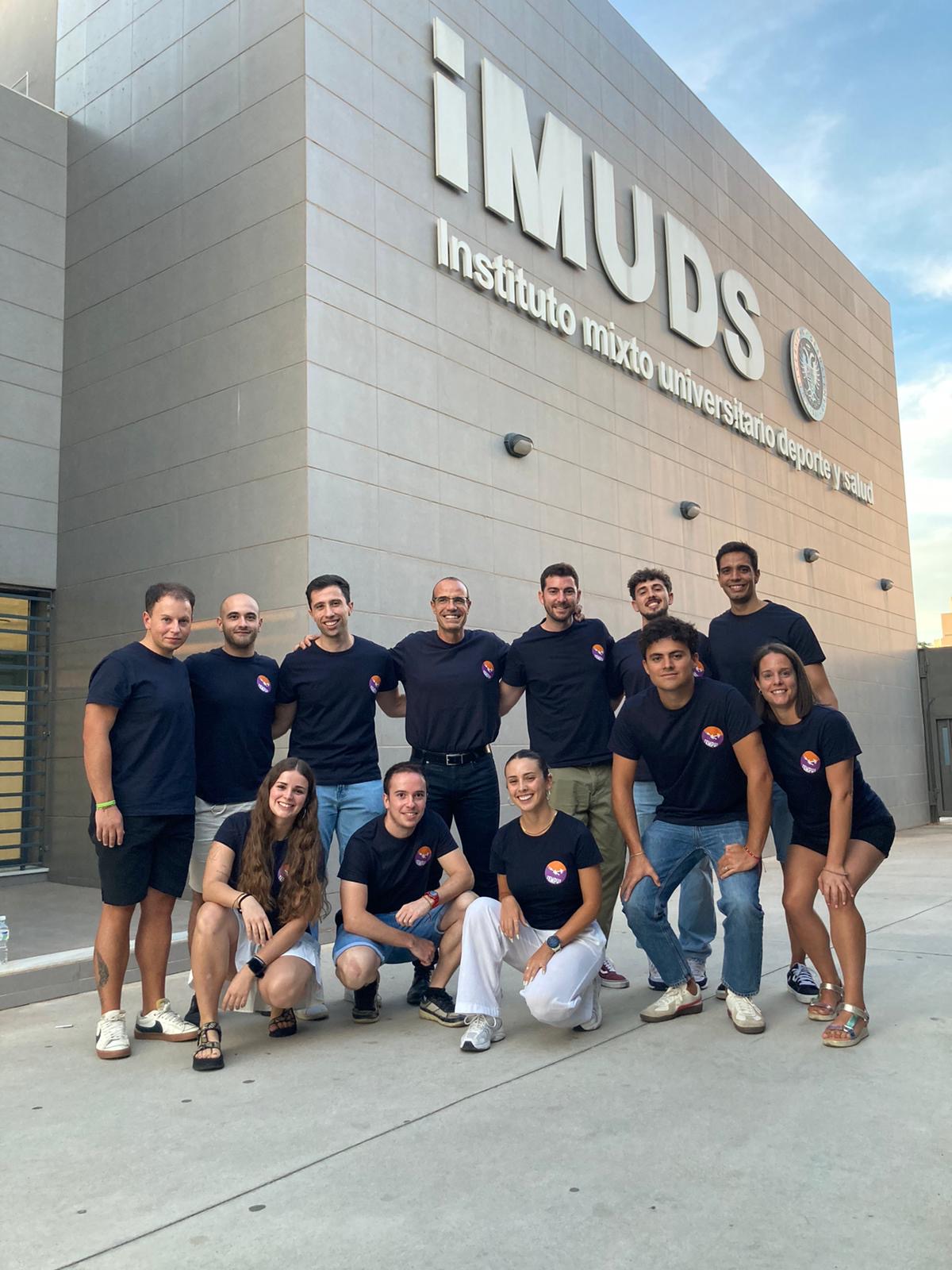
Combining intermittent fasting with supervised exercise helps to lose more weight and body fat than following usual care alone. This is the conclusion of a trial led by the Instituto Mixto Universitario Deporte y Salud (iMUDS) of the University of Granada, in collaboration with the Instituto de Investigación Biosanitaria de Granada (ibs.GRANADA) and the Centro de Investigación Biomédica en Red (CIBER), within the TEMPUS project. The work has been published in Nature Communications.
How the study was done
The trial involved 187 adults with obesity, approximately half of them women. They were randomly assigned to four groups: usual care, intermittent fasting, supervised exercise, and fasting combined with exercise. For 12 weeks, all received education on the Mediterranean diet and physical activity. Those who practiced fasting concentrated their meals within an eight-hour period per day, and the exercise groups followed a supervised program that combined strength training and high-intensity aerobic exercise.
What changed and what did not
Liver fat, measured with magnetic resonance imaging, decreased in all four groups, but without significant differences between the interventions and usual care. Where there were differences was in weight: those who fasted, with or without exercise, lost on average about 2.2 kilos more than the usual care group. The combination of fasting and exercise also produced greater body fat loss than usual care and than exercise alone. The two groups that trained improved their cardiorespiratory fitness, a marker of cardiovascular health.
Among those who had fatty liver at the start, around 30% of those who combined fasting and exercise no longer met the criteria for diagnosing this condition, compared with 6.5% of the usual care group.
The benefits were not maintained at one year
One year after finishing the program, no differences were found between groups in liver fat, and the differences in weight and body composition seen at the end of the 12 weeks were not detected either. According to the researchers, this suggests that longer interventions and strategies that help maintain the benefits are needed, especially in people with high levels of liver fat.
Differences between men and women
The work also examined the response according to sex. Among men, the combination of fasting and exercise reduced liver fat more than usual care, a difference that was not detected among women. Lead co-author Alba Camacho Cardeñosa, a postdoctoral researcher at ibs.GRANADA, warns that "for now, these analyses do not on their own allow us to conclude that the intervention works differently according to sex."
Lead co-author Antonio Clavero Jimeno, a predoctoral researcher at the UGR, notes that "these results allow us to assess the effects of the interventions beyond weight, also taking into account changes in liver fat deposits, as well as total body fat and physical fitness."
Who takes part
The study is led by the PROFITH CTS-977 research group of the iMUDS, with the collaboration of ibs.GRANADA, the Hospital Universitario Clínico San Cecilio, the Hospital Universitario Virgen de las Nieves, the CIBER of Obesity (CIBEROBN) and the CIBER of Frailty and Healthy Ageing (CIBERFES). It is part of Clavero Jimeno's doctoral thesis and is funded by MICIU/AEI and by FEDER, EU.