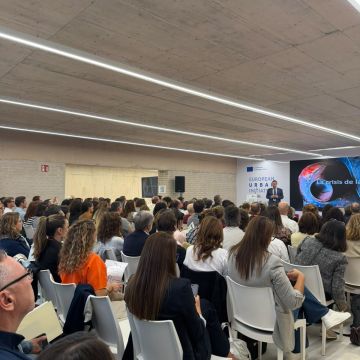
Granada brings together more than 200 experts at the first major meeting of the European Urban Initiative in Spain
Topics University of Granada
The Archivo Histórico de Granada hosts on October 21 and 22 «Innovación Urbana: otras formas de hacer ciudad», the first major training event of the European Urban Initiative in Spain, with more than 200 participants from municipalities and provincial councils.
Redacción ·
The Archivo Histórico de Granada hosts on October 21 and 22 the meeting «Innovación Urbana: otras formas de hacer ciudad», the first major training event that the European Urban Initiative (EUI) organizes in Spain. It brings together more than 200 people from all over the country and from some European countries, including political and technical staff from municipalities and provincial councils.
What it is for
The aim is to incorporate urban innovation into the implementation of local strategies and to give administrations practical tools to move away from traditional approaches. The sessions are held within the framework of the Integrated Action Plans (PAI) of the Local Integrated Development Strategies (EDIL), known as PAI-EDIL.
The programme combines presentations, national and European good practices, interactive workshops and field visits to Granada and its metropolitan area. The sessions are organised around three axes: institutional framework and governance; mobilisation of resources and financing; and monitoring and data governance.
Granada as a laboratory
The field visits cover six initiatives in the city and its metropolitan area: the Centro Inteligente del Agua (Dinapsis), the Ecofactoría, the innovation ecosystem formed by iQuantum, Biometrópoli and S4T, Medialab UGR, the Ecoparque Norte and the Incubadora de Empresas «José Antonio Lorente», together with the pedestrian and cycling route of the river Dílar.
The Universidad de Granada hosts one of those visits, the session «Innovación urbana: metodologías para transformar lo público», at Medialab UGR, its Social Innovation Laboratory. It lasts about two hours and brings together some 50 people from town halls and provincial councils, who work in three rotating laboratories on social innovation, participation, co-design and collaboration with administrations.
The opening
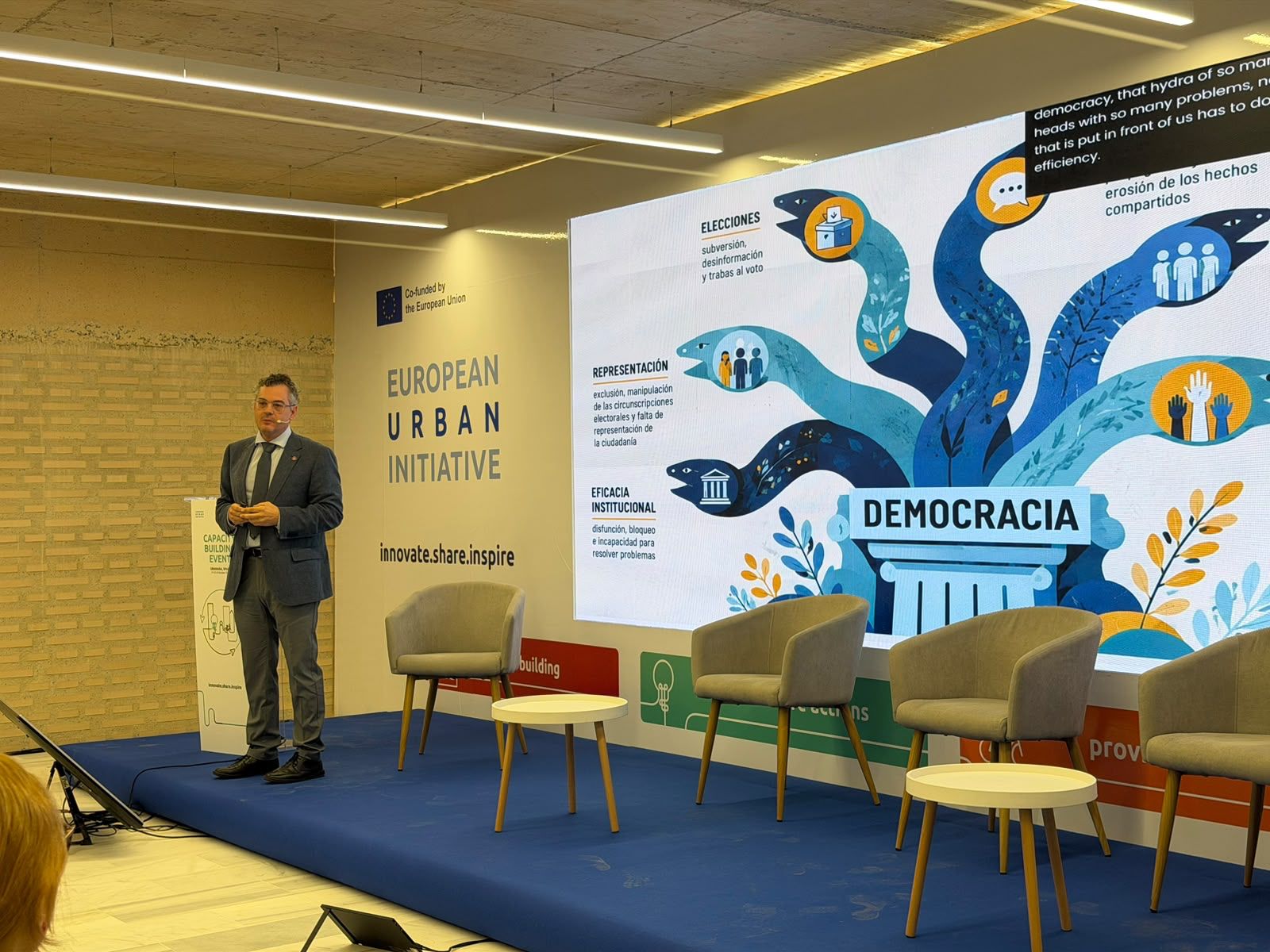
The opening presentation was given by Esteban Romero Frías, vice-rector of Social Innovation, Employability and Entrepreneurship, who framed urban innovation within the challenge of strengthening democracies and valued UGR's alliances with the Ayuntamiento and the Diputación de Granada and with the Junta de Andalucía through the Impronta model. «Innovation is not only implementing technology, but rethinking how we collaborate», the vice-rector said.
The event included a tribute to the professor Juan Latino, linked to the space of the new Archivo Histórico, and to Federico García Lorca.